GTI Report: Timber industry under pressure, seeks to diversify exports
20 January 2026, Yokohama

Break bulk operation in Belém, Brazil. © Teak Resource Company
Timber industries in many countries are navigating operational headwinds while actively pursuing breakthroughs in export diversification, according to the latest Global Timber Index (GTI) Report. The ITTO-supported GTI tracks the performance of the timber sector in pilot countries in Africa, Asia, and Latin America.
Among the ten GTI pilot countries, Ghana (56.6%) stood alone above the 50% threshold, indicating an upward trend in its timber sector. Other countries remained in contraction territory. China (49.9%), the Republic of the Congo (48.0%), Mexico (48.0%), and Brazil (47.9%) recorded readings near the threshold, reflecting relatively stable conditions. Thailand (46.8%), Indonesia (46.3%), and Ecuador (46.3%) showed moderate contraction. Gabon (34.6%) and Malaysia (29.5%) recorded low readings, pointing to a significant downturn in their timber sectors.
National sub-indices revealed export market performance as a notable bright spot this month. Both Gabon and Thailand saw their export markets shift from contraction to significant expansion; Brazil’s export orders grew for the third consecutive month; and the export markets of Indonesia, the Republic of the Congo, and Mexico held steady.
The sub-indices also showed that Ghana's harvesting volume grew for several consecutive months, while production volume increased in both Ghana and China, and new orders posted month-on-month growth in Indonesia, Mexico, and China.
Specialized sub-indices also indicated overall contractions in December. The GTI-Producers Index was at 46.3%, while the GTI-Woodbased Panel Index stood at 45.2%.
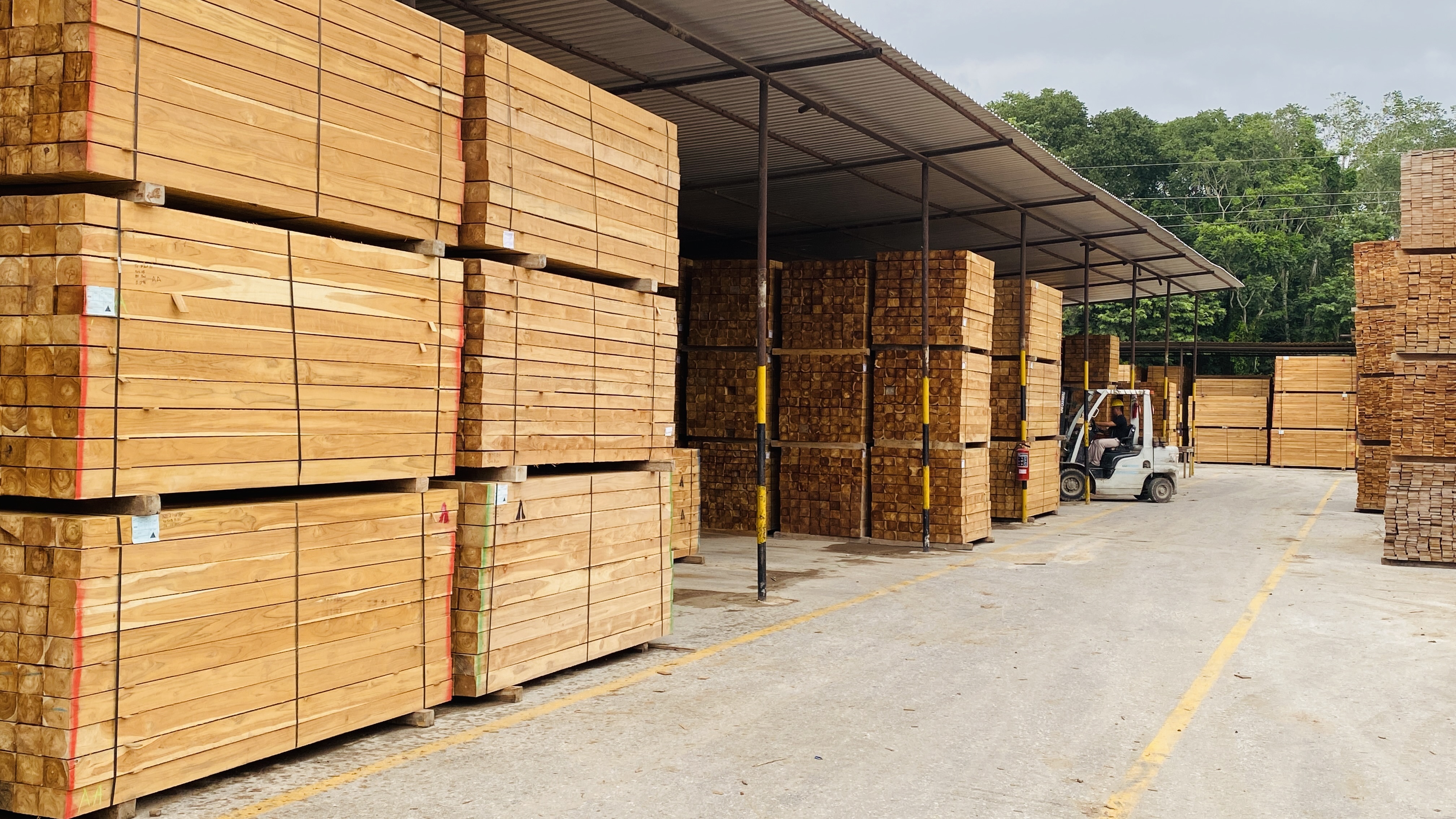
GTI pilot countries are actively pursuing export market diversification. On 21 December, the Indonesian government signed a free trade agreement with Eurasian Economic Union that is expected to boost exports of furniture to non-traditional markets. The Malaysia External Trade Development Corp had partnered with a US home goods e-commerce platform to help local businesses expand online sales to the United States. Meanwhile, Brazil’s timber industry is actively exploring markets like China and the EU to counter export pressures from US tariff increases.
The international operating environment for timber and furniture industries remains complex and volatile. This month, notable adjustments were made to tariffs and trade policies in several GTI pilot countries. For example, China expanded its Hainan Free Trade Port tariff exemptions to nearly all wood raw material, while Mexico raised furniture import duties to 25%-35% for non-FTA countries.
The monthly GTI Report, GTI-Producers Report and GTI-WBP Report are available at www.itto.int/gti/.